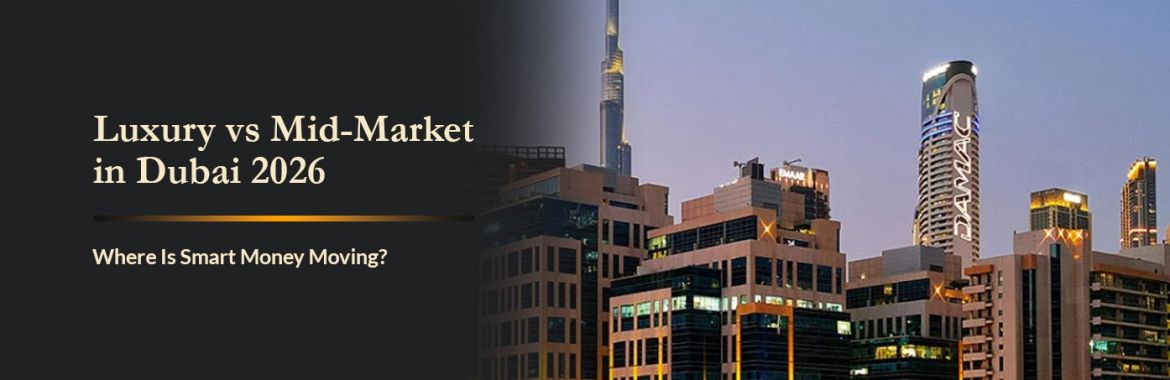
Luxury vs Mid-Market in Dubai 2026: Where Is Smart Money Moving?
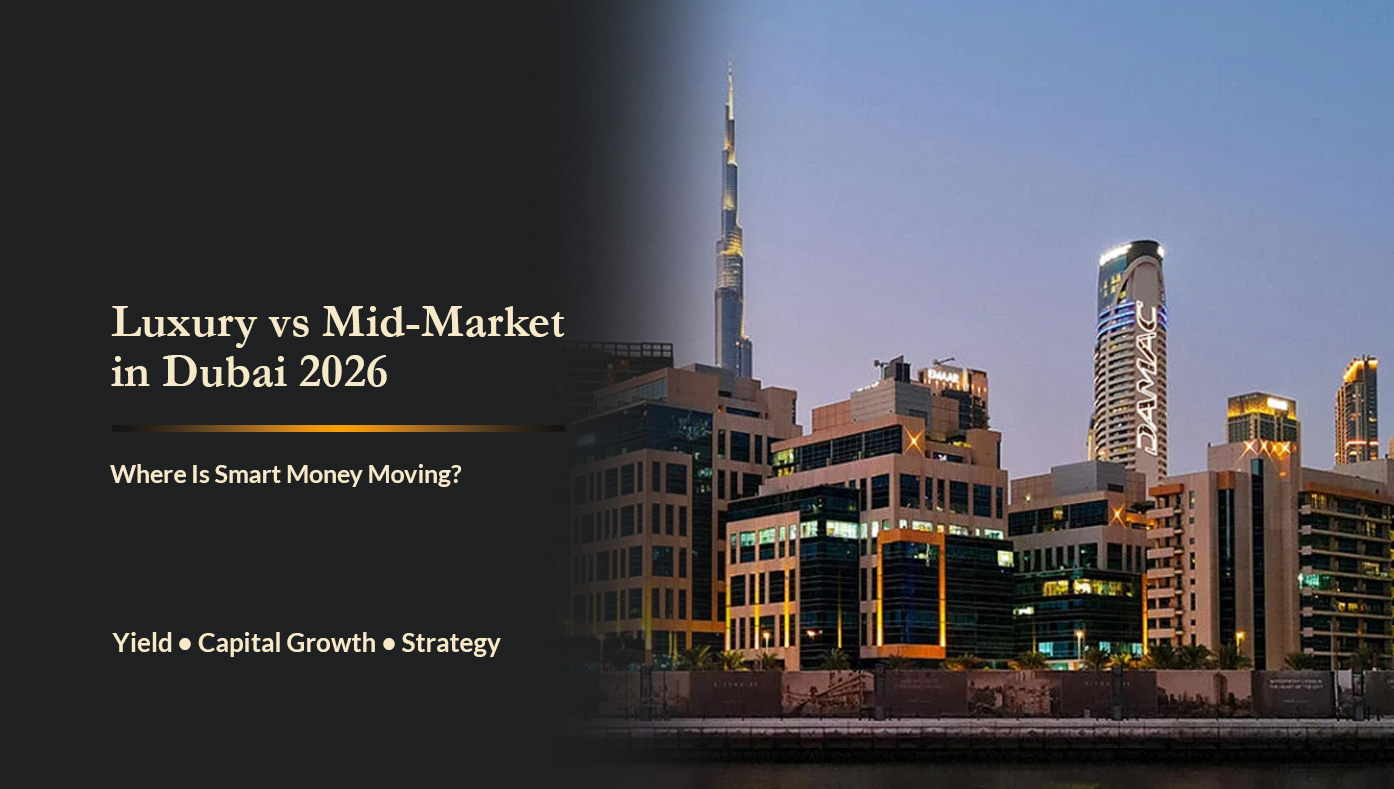
Prime Penthouses or Practical Apartments? The Strategic Shift Happening Inside Dubai’s Real Estate Market
Investors researching Luxury real estate Dubai 2026, comparing mid-market property Dubai, or analysing where to invest in Dubai real estate are facing a more nuanced decision than ever before.
Dubai is no longer a single-speed property market.
It is now a layered ecosystem, where ultra-luxury waterfront penthouses, branded residences, and trophy villas sit alongside high-performing mid-market apartments and rental-driven communities.
The real question for 2026 is not, “Is Dubai strong?”
It is: Which segment aligns with your capital strategy?
For many British buyers, this is no longer just a market curiosity. It is part of a wider decision around investing in Dubai from the UK, building a more balanced overseas portfolio, and understanding how different asset classes behave inside a maturing property market.
This guide breaks down where capital is actually flowing and what disciplined investors are doing differently.
- The Two Speeds of Dubai Real Estate
Dubai’s property market in 2026 is operating across two distinct yet connected segments:
Luxury and Ultra-Prime Real Estate
- Branded residences
- Waterfront villas
- Prime Downtown towers
- Palm Jumeirah assets
- DIFC and high-end marina projects
Mid-Market and Income-Focused Property
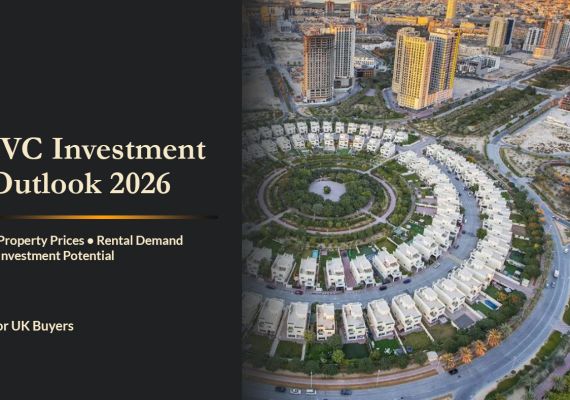
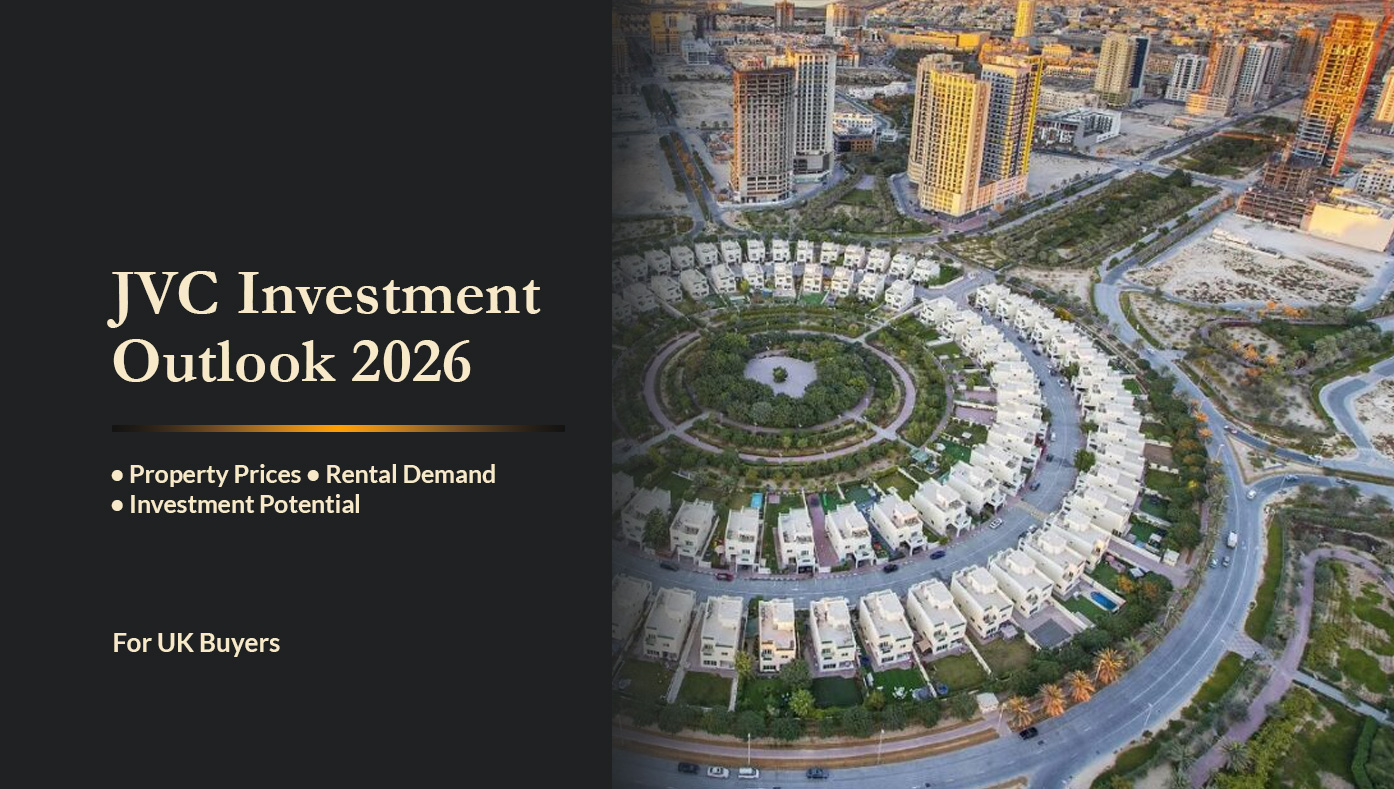
- JVC apartments
- Dubai South communities
- Arjan and Al Furjan
- Business Bay mid-tier towers
- Emerging suburban villa clusters
Both segments are active.
Both attract serious capital.
But they behave very differently during market transitions.
Understanding that difference is what separates speculators from portfolio builders. That is also why more readers start with a wider Dubai real estate guide for UK investors before narrowing down whether luxury or mid-market fits their strategy best.
- What Defines “Luxury Real Estate” in Dubai?
The Luxury real estate Dubai segment usually includes:
- Branded developments
- High-floor premium views
- Exclusive waterfront access
- Architectural distinction
- Scarcity-driven positioning
Locations commonly associated with this segment include:
- Downtown Dubai
- Palm Jumeirah
- Dubai Marina prime towers
- DIFC
- select villa areas in Dubai Hills Estate
Luxury buyers are typically:
- High-net-worth individuals
- Global capital allocators
- International lifestyle buyers
- Portfolio diversifiers
This segment usually prioritises:
- Capital preservation
- Prestige positioning
- Global liquidity
- Long-term appreciation
Yield is not always the primary driver.
For London-based buyers exploring this side of the market, it often helps to compare luxury apartments in Dubai from London with broader luxury homes in Dubai for UK investors before committing to a specific asset class.
- What Defines the Mid-Market Segment?
The mid-market property Dubai segment is more focused on:
- Affordability relative to location
- Strong tenant demand
- Rental yield stability
- Higher transaction volume
- A broader buyer base
High-performing mid-market locations often include:
- JVC
- Dubai South
- Arjan
- Al Furjan
- parts of Business Bay
- Dubai Hills apartments
This segment tends to attract:
- Yield-focused investors
- UK and European rental buyers
- First-time overseas investors
- Portfolio scalers
Here, net rental performance matters more than branding. That is why many mid-market investors also spend time understanding the wider Dubai rental market for UK investors and how Dubai property ROI really works before focusing on launch marketing alone.
- Capital Flow Patterns in 2026
So where is smart money actually moving?
The honest answer is: both, but for very different reasons.
Luxury Capital Flow
Luxury continues to attract:
- International wealth relocation
- Family office investment
- Lifestyle-driven buyers
- Safe-haven capital
Dubai’s global positioning has strengthened over the last few years, which has reinforced demand for high-end assets.
However, pricing in some ultra-prime segments has already absorbed significant appreciation.
That does not automatically mean risk.
It means selectivity matters more now.
Mid-Market Capital Flow
Mid-market capital continues to attract attention because of:
- Rental market resilience
- Population growth
- A more accessible entry point
- Strong occupancy in the right communities
As supply arrives across more premium zones, many investors are rediscovering the defensive value of well-selected mid-tier buildings with broader tenant depth.
- Yield Comparison: Luxury vs Mid-Market
While performance varies by building and micro-location, the broad pattern in 2026 looks like this:
Luxury
- Lower gross yields
- Stronger capital positioning
- Higher ticket sizes
- International resale liquidity
Mid-Market
- Higher gross yields
- Deeper tenant demand
- Higher transaction volume
- Faster rental absorption
The strategic question becomes very simple:
Are you prioritising income?
Or are you prioritising capital positioning?
There is no universal answer. Only alignment between the asset and your wider goals. That is why many investors naturally compare this with Dubai vs UK property investment before deciding how aggressive or defensive they want their portfolio to be.
- Risk Exposure Differences
Luxury risk factors often include:
- A smaller buyer pool
- Higher entry costs
- Greater sensitivity to global liquidity cycles
Mid-market risk factors often include:
- Supply concentration in certain pockets
- Developer variation
- Stronger dependence on building-level management quality
In both segments, asset selection matters more than postcode selection.
That is exactly why investors should look beyond district labels and understand how to compare buildings in Dubai for investment before treating any area as a guaranteed winner.
- Off-Plan Considerations in Both Segments
The Dubai off-plan real estate pipeline continues to bring new stock into both luxury and mid-market segments.
Luxury off-plan
- Often branded
- Higher marketing visibility
- Stronger international attention
- Larger capital commitment
Mid-market off-plan
- Payment-plan driven
- Popular with yield-focused investors
- More competitive pricing
- Strong tenant potential at completion
Investors reviewing off-plan property in Dubai should always assess:
- Delivery timelines
- Developer track record
- Escrow protections
- Exit liquidity
Off-plan can improve returns, but only when it matches real demand and the right timeline. For a deeper breakdown, it helps to read the full off-plan Dubai property guide for UK buyers and compare funding routes through cash, mortgage, and developer payment plans in Dubai.
- Behaviour During Market Stabilisation
During stabilisation phases, the two segments often react differently.
Luxury may:
- See slower transaction velocity
- Maintain stronger pricing in truly prime zones
- Create more negotiation room on non-prime stock
Mid-market may:
- Maintain rental absorption
- See more active resale turnover
- Experience selective yield compression if prices rise too fast
Historically, more disciplined investors do not treat this as an either-or debate.
They diversify across both tiers where appropriate.
- Global Comparison: Why Dubai Remains Competitive
Compared with London, New York, Singapore, and Paris, Dubai still holds a rare dual advantage.
Luxury property remains competitive on a price-per-square-foot basis, while mid-market yields remain stronger than what many Western investors are used to seeing at home.
That is one reason Dubai continues to appeal to both trophy-asset buyers and income-focused investors. Few cities can offer both at the same time.
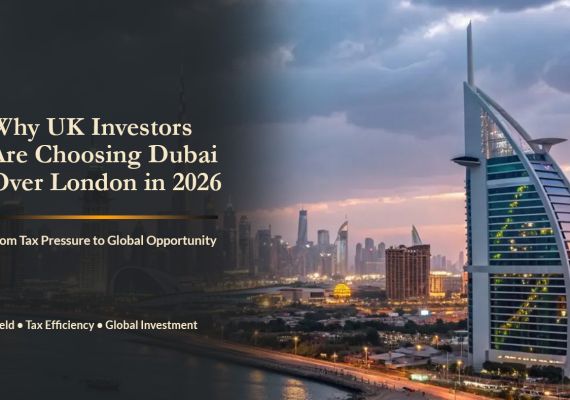
If your lens is still primarily British, this wider comparison with why UK investors are choosing Dubai over London adds useful context to the segment decision.
- Where Smart Investors Are Positioning in 2026
The clearest trend among disciplined investors is not blind loyalty to one segment.
It is balance.
Common patterns include:
- Blending one prestige-led asset with mid-market income units
- Prioritising buildings with proven rental history
- Avoiding oversupplied micro-pockets
- Negotiating more carefully in stabilising sub-markets
- Focusing on net return rather than launch-day excitement
The strongest portfolios are rarely all-luxury or all-mid-market.
They are structured.
And structure nearly always beats noise.
Final Perspective: It’s Not Luxury vs Mid-Market — It’s Strategy vs Speculation
Dubai’s property market in 2026 is far more sophisticated than many outside investors realise.
The real debate is not which segment is “better.”
It is:
- Which segment fits your risk tolerance?
- Which segment supports your income needs?
- Which segment matches your holding horizon?
- Which segment gives you the right liquidity profile?
Luxury brings prestige, scarcity, and stronger capital positioning.
Mid-market brings yield, tenant resilience, and easier portfolio scaling.
Smart money does not chase whichever segment happens to sound louder.
It allocates with clarity.
Dubai continues to offer both paths, but only disciplined selection converts opportunity into long-term performance.
And in a more mature market, discipline is the real advantage.
For investors who want a more grounded buying process across either segment, working with professional property consultants in London or a Dubai-based agency serving the UK can make it much easier to compare luxury opportunities and mid-market assets with real strategic clarity.