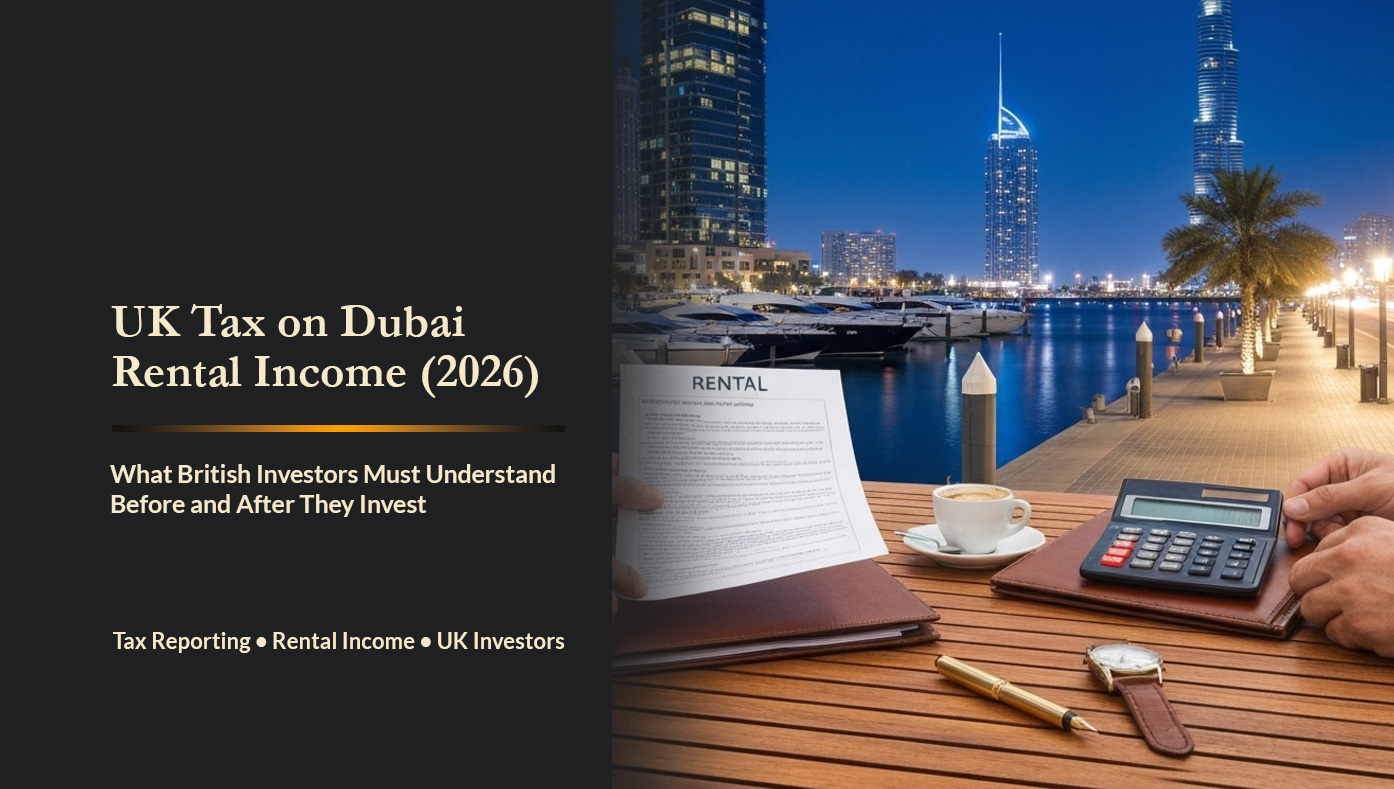
Dubai Property Taxes for UK Investors 2026

The Definitive Guide to Tax-Free Ownership, Rental Income & Smart Structuring
A complete, UK-focused breakdown of Dubai property taxes in 2026 — what British investors pay, what they don’t, and how to structure Dubai real estate investments for maximum after-tax returns.
One of the biggest reasons UK investors are moving capital out of Britain and into Dubai is simple: tax efficiency. But while Dubai is widely described as “tax-free,” many British buyers want clarity — not marketing slogans.
This guide explains, in clear and practical terms, exactly how Dubai property taxes work for UK investors in 2026, how they compare to the UK, and what British buyers need to plan for before investing.
If you’re searching for “Dubai property tax for UK investors”, “is Dubai property tax free”, or “UK tax on Dubai rental income”, this page is written specifically for you.
For a complete market overview first, see: Invest in Dubai from UK – 2026 Complete Guide
Is Dubai Really Tax-Free for Property Investors?
Yes — but with important context.
In Dubai (and the wider UAE), there are no recurring property taxes of the kind UK investors are used to. That alone changes the long-term maths of property ownership.
In 2026, Dubai has:
- No annual property tax
- No tax on rental income
- No capital gains tax when you sell
- No inheritance tax on Dubai-based real estate
This applies to:
- UK residents investing from Britain
- British expats living abroad
- Non-resident landlords
However, UK investors must still consider how Dubai income interacts with UK tax residency rules, which is why understanding both sides matters.
A clear starting point is the Dubai tax guide for UK investors, which explains common scenarios British buyers face.
Dubai Property Taxes vs UK Property Taxes (Why Net Returns Are So Different)
To understand why Dubai is so attractive to British investors, it helps to compare like-for-like.
UK property typically involves:
- Stamp Duty Land Tax (often significant for second homes)
- Income tax on rental profits
- Capital Gains Tax on sale
- Inheritance tax exposure
- Ongoing compliance and reporting costs
Dubai property typically involves:
- One-time 4% Dubai Land Department (DLD) transfer fee
- No annual property tax
- No tax on rental income in the UAE
- No capital gains tax
- No inheritance tax under UAE law
For many UK investors, this difference alone can increase net yield by several percentage points, even before rental growth or capital appreciation is considered.
The Only Mandatory Property Cost in Dubai (What UK Buyers Actually Pay)
While Dubai does not charge ongoing property taxes, there are still transparent, one-time and annual costs that UK investors must understand.
- Dubai Land Department (DLD) Fee
This is a one-time transfer fee of 4% of the purchase price, paid at the time of purchase.
- Paid once only
- Applies to ready and off-plan properties
- No repeat charges on holding
- Service Charges
Annual service charges cover maintenance of common areas, amenities, security, and building management.
- Varies by building and community
- Higher in luxury towers and branded residences
- Should always be factored into net yield calculations
Understanding service charges is critical when comparing locations like Dubai Marina versus family-focused communities such as Dubai Hills Estate.
Do UK Investors Pay UK Tax on Dubai Rental Income?
This depends entirely on your UK tax residency status and personal circumstances.
Key points UK investors should understand:
- Dubai does not tax your rental income locally
- UK tax rules may still apply depending on residency
- Double taxation treaties prevent being taxed twice on the same income
This is why most British investors seek guidance that understands both systems — which is exactly why many work with a London-based Dubai real estate company that can coordinate with UK tax advisors where required.
Capital Gains Tax: What Happens When You Sell?
Dubai does not levy capital gains tax on property sales.
That means:
- 100% of the sale profit stays with you under UAE law
- No holding period requirement
- No sliding CGT scale
For UK investors used to factoring CGT into exit planning, this significantly improves long-term returns — especially in high-growth areas like Dubai Marina, Business Bay, and emerging districts such as Al Furjan.
Inheritance & Estate Planning for UK Investors
Dubai does not impose inheritance tax on property assets.
For UK investors, this opens up opportunities for:
- Estate planning outside the UK tax net
- Long-term family wealth structuring
- Multi-generational ownership planning
Proper structuring is essential, which is why many UK families combine Dubai ownership with professional legal planning — particularly when purchasing higher-value assets such as villas or penthouses.
Freehold Ownership & Tax Clarity for UK Buyers
Tax efficiency only works when ownership is clear.
Dubai allows UK buyers to own property on a freehold basis in designated areas, meaning:
- Full ownership rights
- Clear title deeds registered with DLD
- No local sponsor required
This is why understanding freehold vs leasehold property in Dubai is a key step before purchasing.
How the Golden Visa Fits into Tax & Investment Planning
Many UK investors combine property ownership with long-term residency planning.
In 2026, qualifying property investments can support eligibility for the UAE Golden Visa, offering:
- 10-year renewable residency
- Family sponsorship
- No minimum stay requirement
This is particularly relevant for:
- UK families considering relocation
- Business owners expanding internationally
- Investors planning partial residency
A detailed overview is available in the Dubai Golden Visa guide.
Common Tax Misunderstandings UK Investors Should Avoid
Despite Dubai’s simplicity, mistakes still happen.
- Assuming “tax-free” means zero planning is required
- Ignoring service charges when calculating net yield
- Buying without understanding UK residency rules
- Using unregulated advisors or agents
UK investors who want clarity often rely on structured resources like the UK investors’ Dubai property guide to avoid these pitfalls.
Which Dubai Areas Offer the Best After-Tax Returns for UK Investors?
Because there are no local property taxes, after-tax returns are driven primarily by:
- Rental demand
- Service charge efficiency
- Capital growth potential
That’s why UK investors often focus on areas such as:
- Dubai Marina – consistent rental demand
- Dubai Hills Estate – long-term family stability
- Business Bay – yield-focused central living
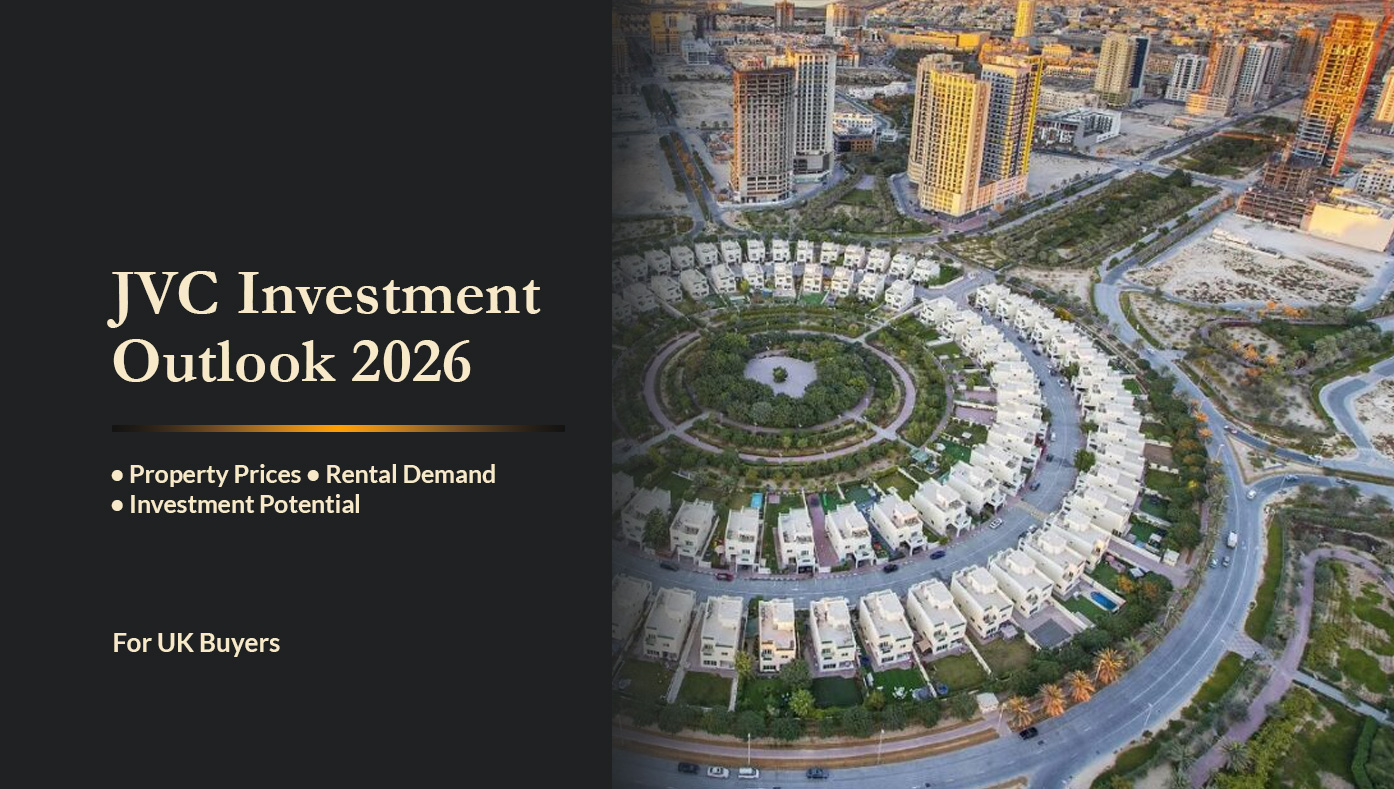
- JVC – accessible buy-to-let entry
Final Thoughts: Why Dubai’s Tax Structure Still Wins for UK Investors in 2026
Dubai’s appeal is not about avoiding responsibility — it’s about investing in a system designed for transparency, growth, and long-term participation.
For UK investors in 2026, Dubai offers:
- Predictable property costs
- No recurring property taxes
- Strong rental demand
- Secure freehold ownership
- Clear exit pathways
When combined with the right location and professional guidance, Dubai remains one of the most tax-efficient property markets available to British investors today.
Ready to Build a Tax-Efficient Dubai Property Strategy from the UK?
Speak with Aeon & Trisl UK for a personalised investment consultation covering tax structure, location strategy, rental projections, and long-term planning — all tailored to UK buyers.
- London Office: +44 203 727 5518
- Dubai Office: +971 4 395 7550
- Book your UK consultation